NFFA-DI at Trieste NEXT
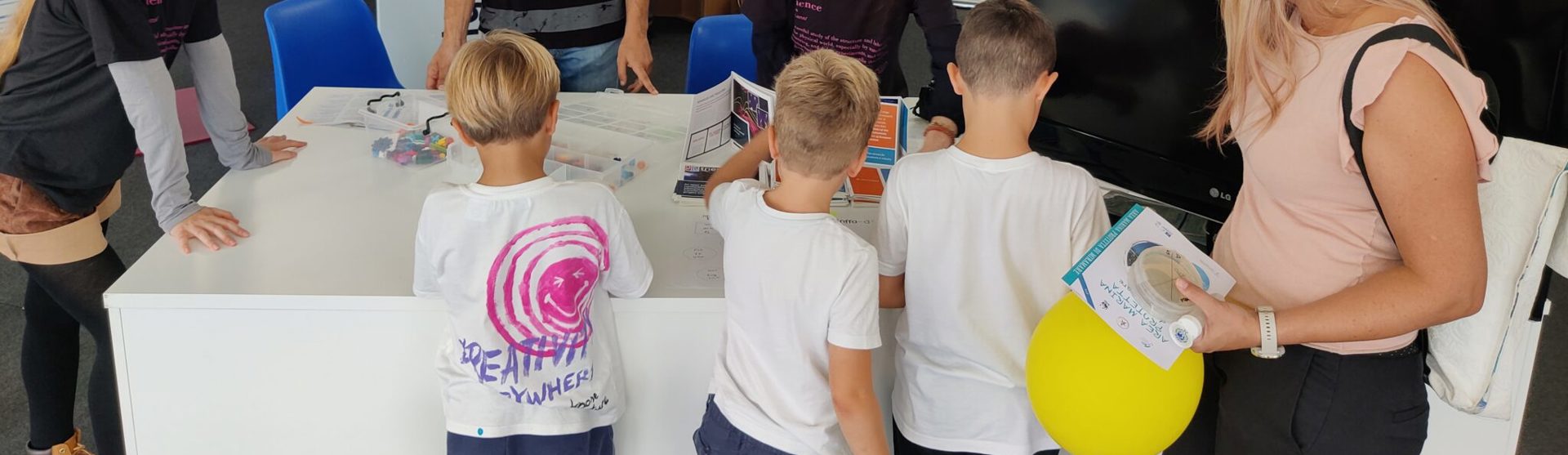
27 September 2023 | AnnouncementsOn Friday, September 22, NFFA-DI participated in the Trieste NEXT scientific research festival with two activities aimed at giving visitors a taste of the founding principles of the project.
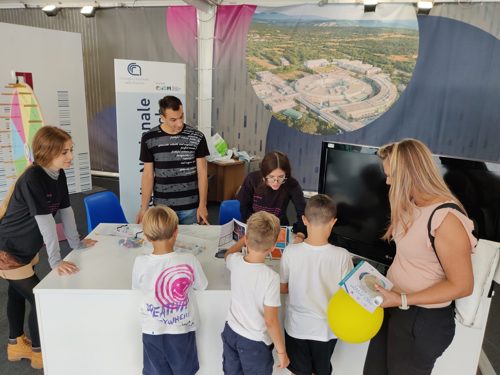
The first activity consisted of a board game that reproduced an open and distributed research infrastructure. After drawing three cards representing the scientific techniques needed to complete their experiment, players challenged each other to try to visit the laboratories that offered those research methods in the least number of turns possible.
Research infrastructures such as NFFA-DI, in fact, play a crucial role in the world of scientific research because they allow scientists to access advanced skills and tools made available at cutting-edge laboratories, creating long-lasting collaborations and paving the way for rapid innovation and professional growth.
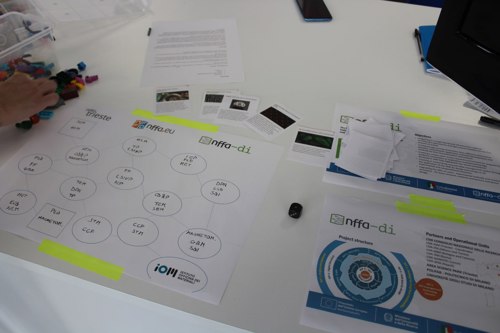
The second activity consisted of trying to reproduce a simple already built object (a metaphor for a research result published in a scientific journal) using the necessary building blocks (i.e. data). Two players at a time challenged each other to reproduce the object in the shortest time possible, one using a briefcase in which the data bricks were arranged in an orderly fashion, searchable and accessible (FAIR), the other using a box containing a mix of data bricks in bulk and mixed with other similar but incompatible objects. The player who had to use the disordered box, however, had the construction instructions (the metadata) available.
The briefcase and the box represent two data storage systems: one FAIR (containing searchable, accessible, interoperable and reusable data), and the other not.
One might think that scientific data by definition is stored as in the briefcase and is therefore easily accessible to the scientific community when necessary, but currently the data of global scientific research is much closer to the representation of the disordered box: it is difficult to find, some is not usable because it is in a format that is no longer supported or in a proprietary format that not all researchers have a way to open (incompatible bricks). Not to mention that the vast majority of data is accessible only by contacting the authors, who may have lost it in the meantime.
Metadata, or the information needed to describe the data correctly, is as important as the data. In our case, the assembly instructions were useful to reproduce the result of the scientific research quite easily, despite the data being archived in bulk.